|
|

 |
 |
 |
 |
 |
 |
 |
 |
 |
 |
 |
 |
 |
 |

|
 |
|
fcsnooker
- Top Quality Snooker Coaching and Instruction in association
with Mr Frank Callan - Advanced
Level - |
 |
|
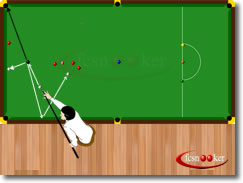
In the first place it is impossible to use back-spin if the ball is flush against the cushion. This immediately limits the range of shots that can be played, forcing the player into above centre striking. Whilst
it is possible to get some back-spin on the cue ball if it is an
inch or two away from the cushion, this can only be done by raising
the butt of the cue high in the air. Accuracy suffers when the butt
is raised and this apsect of the chosen shot should be taken into
consideration before attempting to do so. Cushion heights can also alter the degree of difficulty of the shot that the player is faced with. All tables differ slightly in cushion height, some more than others. So what can be done to increase the success rate of shots off the cushion? Firstly, like every other shot, preparation is vitally important. This is heightened when faced with awkward bridging and cueing. In addition, the player must realise that not too much should be attempted when the cue ball is stationed close to the cushion. In The Bridge, I have stressed the importance of the first finger of the bridge hand being pressed firmly into the cloth when placing the hand on the table. The same applies when playing from off the cushion.
At
first this may feel uncomfortable but with practice you will soon
begin to feel that more movement is possible. This in turn will
lead to a smoother stroke through the ball. In addition, experiment with a lighter grip than normal. This will facilitate a smoother action and assist the delivery of the cue. Only practice however can improve your accuracy and consistency. As mentioned, cushion heights vary marginally, but whatever the circumstances there will not be much of the cue ball to hit when it is tight against the cushion. A method that Steve Davis operates very well is to raise the bridge part of the hand very slightly as it rests on the cushion rail. If you watch Davis in a situation like this you will notice that he can cue freely without the tip of the cue coming into contact with the cushion.
Once
again firmness of the bridge hand is essential. These shots do mean
you have to hold the cue at an angle instead of near the horizontal
- which in itself is not a good thing - but smooth cueing and I
repeat, not attempting too much with the cue ball will help to even
things out. You will at least be more positive on the shot if you are actually coming down on the cue ball rather than trying to strike it by scraping along the cushion rail. When playing unusual shots most people fail because their preparations lack rhythm or are otherwise incorrect. If they knew how to prepare properly their apprehension would disappear. It is all a question of practice and making the correct choice of bridge, though you can practice as much as you like and some positions will still be a lot more difficult than others. Remember to keep your bridge hand as firm as possible, your head perfectly still and the cue as close to parallel with the table as possible.
Frank Callan Suite - 282 Ribbleton Lane, Ribbleton, Preston, Lancashire, England - PR1 5EB - tel. + 44 (0) 1772 702211 - info@fcsnooker.co.uk Visit the links below for further information>>>>>>>>>>>>>>>>> |
 All
players realise that the game becomes much harder when playing shots
off the cushion.
All
players realise that the game becomes much harder when playing shots
off the cushion.
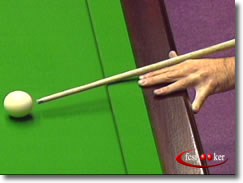
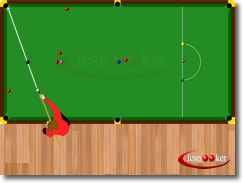
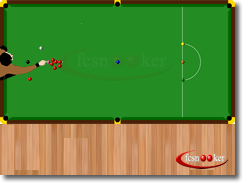
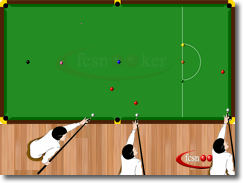
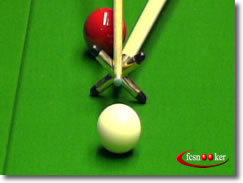
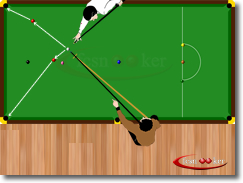
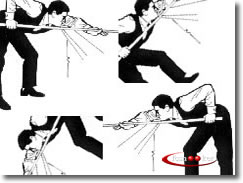
 Along
with the other fingers the bridge hand should be raised slightly,
so that when you proceed with the waggles the cue is kept clear
of the cushion. Fig 1 shows the player at address, and Fig 2 shows
the same cueing position, with the player about to strike the cue
ball.
Along
with the other fingers the bridge hand should be raised slightly,
so that when you proceed with the waggles the cue is kept clear
of the cushion. Fig 1 shows the player at address, and Fig 2 shows
the same cueing position, with the player about to strike the cue
ball.
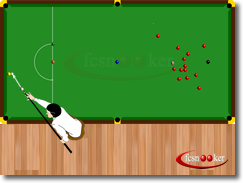
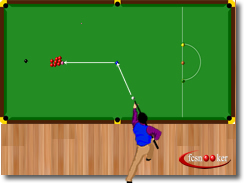
 Obviously
you shouldn't try to do anything very ambitious with the cue ball
when it is tight to the cushion, but if you do need more power,
raise the bridge slightly higher, as shown in Fig 3.
Obviously
you shouldn't try to do anything very ambitious with the cue ball
when it is tight to the cushion, but if you do need more power,
raise the bridge slightly higher, as shown in Fig 3.

 |
 |
 |
 |
 |
 |
 |
 |
 |
 |
 |
 |
 |
 |
 |
 |
 |
 |
 |
 |
| |
|||
 |
 |
|
fcsnooker
- The Frank Callan Suite - 282 Ribbleton Lane, Ribbleton, Preston,
Lancashire, England - PR1 5EB - tel.
+ 44 (01772) 702211 - info@fcsnooker.co.uk |
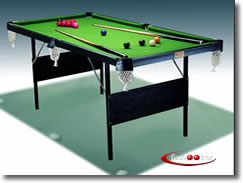
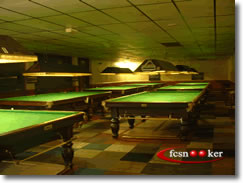
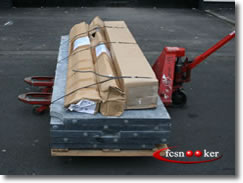
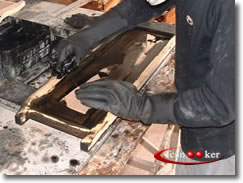
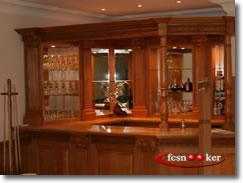
| Snooker
Tables, Snooker Dining Tables, English Pool Tables and American
Pool Tables are very heavy, durable and long-lasting pieces of leisure
equipment. Shown below are many examples of recently installed table
products in clients home addresses. |
|||
 |
 |
|
 |
|
Quick
Links to the fcsnooker Online Shopping
Catalogue - Buy Products Online |
|||
 |
 |
 |
 |
 |
 |
 |
 |
 |
 |
 |
 |
 |
 |
 |
 |
 |
 |
 |
 |
|
Useful
information to consider before making any Snooker
or Pool table purchase |
|||
 |
 |
 |
 |
 |
 |
 |
 |
 |
 |
 |
 |
 |
 |
 |
 |
|
Snooker
Coaching - Hints and tips, practice routines and a large array of
supporting information |
|||
 |
 |
 |
 |
 |
 |
 |
 |
|
General
information related to fcsnooker, how
to place orders for products, buying terms and conditions, plus
delivery and installation guidance. |
|||
 |
 |
|
 |
 |
 |
 |
 |
| To order a newly manufactured snooker or pool table a 10% deposit will be required to book into the fcsnooker order book. Deposit payments are non-refundable should any table order be cancelled. Final remittance payments payable after the table is fully installed and all products and services have been completed. |
|||
|
The
Frank
Callan Suite - 282 Ribbleton Lane, Preston, Lancashire, England
- PR1 5EB Company Registration Number: 039 380 85 - VAT Registration Number: 732 5275 41 © 2012 fcsnooker. All rights reserved |
|||
|
|
|||