|
|

 |
 |
 |
 |
 |
 |
 |
 |
 |
 |
 |
 |
 |
 |

|
 |
|
fcsnooker
- Top Quality Snooker Coaching and Instruction - In association
with Mr Frank Callan Advanced Level - "Two Tasks for the Brain" |
 |
|
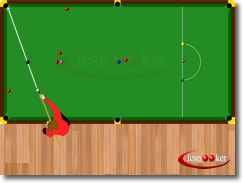
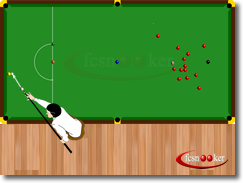
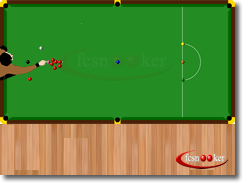
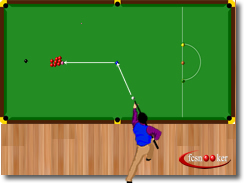
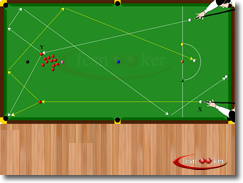
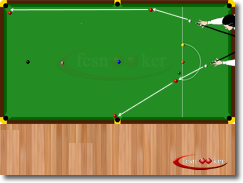
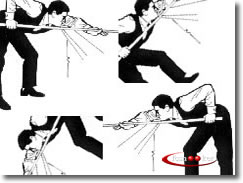
But remember, in most cases, potting the object ball is not the only requirement. Positioning the cue ball for the next shot is another consideration and this alone can often lead to a missed pot. As an example, imagine a situation where having potted a red, you are now in a position to pot the blue off its spot into a centre pocket. But because there are no loose reds available, you have to play a cannon on to the pink ball to disturb the reds in the pack.
1)
the pot on the blue, which remains the number one priority.
2) to strike the cue ball in exactly the right place and at the right speed to achieve the cannon on the pink. This is a top-class shot, which is extremely difficult to execute. Things can go wrong and there is always the danger of catching the pink awkwardly and going in-off into one of the top pockets.
Alternatively the blue is missed as your brain focuses on achieving
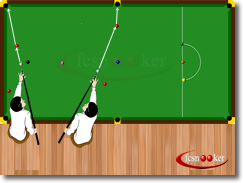
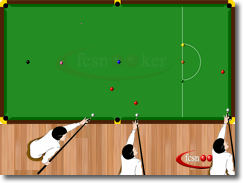
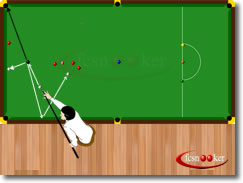
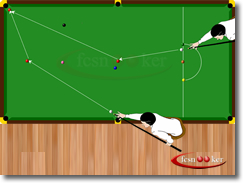
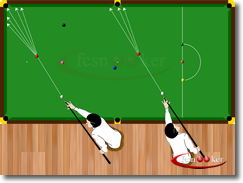
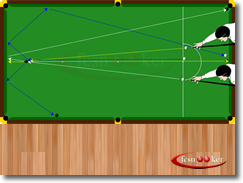
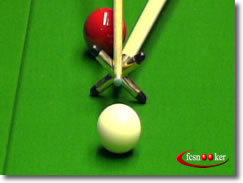
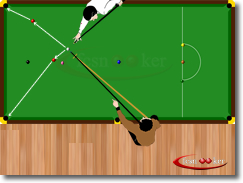
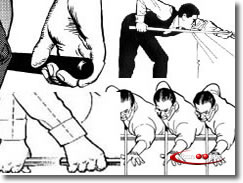
Before you have struck the cue ball, your eyes have drifted towards the pack to see if you have come into contact with the pink correctly. This is a very common fault and happens in so many other situations. How then can we ensure that your eyes remain on the object ball when striking the white? There are three ways. ·
Clearly this is only one example of when your mind may be faced with more than one issue to consider. A distraction in the crowd or your playing surrounds, a referees decision, the requirement for inch perfect position, the position on the scoreboard all create distractions from the most important thing of all. What happens on the table! Following the correct routines and having method in your game can prevent the errors that occur when your brain is faced with a number of tasks. Frank Callan Suite - 282 Ribbleton Lane, Ribbleton, Preston, Lancashire, England - PR1 5EB - tel. + 44 (0) 1772 702211 - info@fcsnooker.co.uk Visit the links below for further information>>>>>>>>>>>>>>>>> |
 Now
your brain has two tasks to achieve:
Now
your brain has two tasks to achieve:  the
second part of the shot instead of the first. If this is the
case, what has happened is this;
the
second part of the shot instead of the first. If this is the
case, what has happened is this; Once
again, I recommend practising all these methods to find out
which works best for you. Do not underestimate the importance
of sighting the shot correctly.
Once
again, I recommend practising all these methods to find out
which works best for you. Do not underestimate the importance
of sighting the shot correctly.  |
 |
 |
 |
 |
 |
 |
 |
 |
 |
 |
 |
 |
 |
 |
 |
 |
 |
 |
 |
| |
|||
 |
 |
|
fcsnooker
- The Frank Callan Suite - 282 Ribbleton Lane, Ribbleton, Preston,
Lancashire, England - PR1 5EB - tel.
+ 44 (01772) 702211 - info@fcsnooker.co.uk |
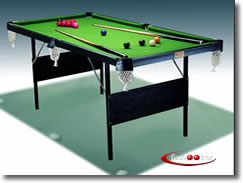
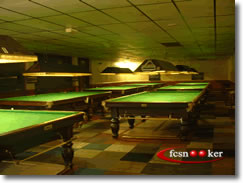
| Snooker
Tables, Snooker Dining Tables, English Pool Tables and American
Pool Tables are very heavy, durable and long-lasting pieces of leisure
equipment. Shown below are many examples of recently installed table
products in clients home addresses. |
|||
 |
 |
|
 |
|
Quick
Links to the fcsnooker Online Shopping
Catalogue - Buy Products Online |
|||
 |
 |
 |
 |
 |
 |
 |
 |
 |
 |
 |
 |
 |
 |
 |
 |
 |
 |
 |
 |
|
Useful
information to consider before making any Snooker
or Pool table purchase |
|||
 |
 |
 |
 |
 |
 |
 |
 |
 |
 |
 |
 |
 |
 |
 |
 |
|
Snooker
Coaching - Hints and tips, practice routines and a large array of
supporting information |
|||
 |
 |
 |
 |
 |
 |
 |
 |
|
General
information related to fcsnooker, how
to place orders for products, buying terms and conditions, plus
general delivery and installation guidance. |
|||
 |
 |
|
 |
 |
 |
 |
 |
| To order a newly manufactured snooker or pool table a 10% deposit will be required to book into the fcsnooker order book. Deposit payments are non-refundable should any table order be cancelled. Final remittance payments payable after the table is fully installed and all products and services have been completed. |
|||
|
The
Frank
Callan Suite - 282 Ribbleton Lane, Preston, Lancashire, England
- PR1 5EB Company Registration Number: 039 380 85 - VAT Registration Number: 732 5275 41 © 2012 fcsnooker. All rights reserved |
|||
|
|
|||